AI in Marketing Strategies
How artificial intelligence is transforming marketing. Discover strategies, innovative tools, and practical applications to improve efficiency and personalization.
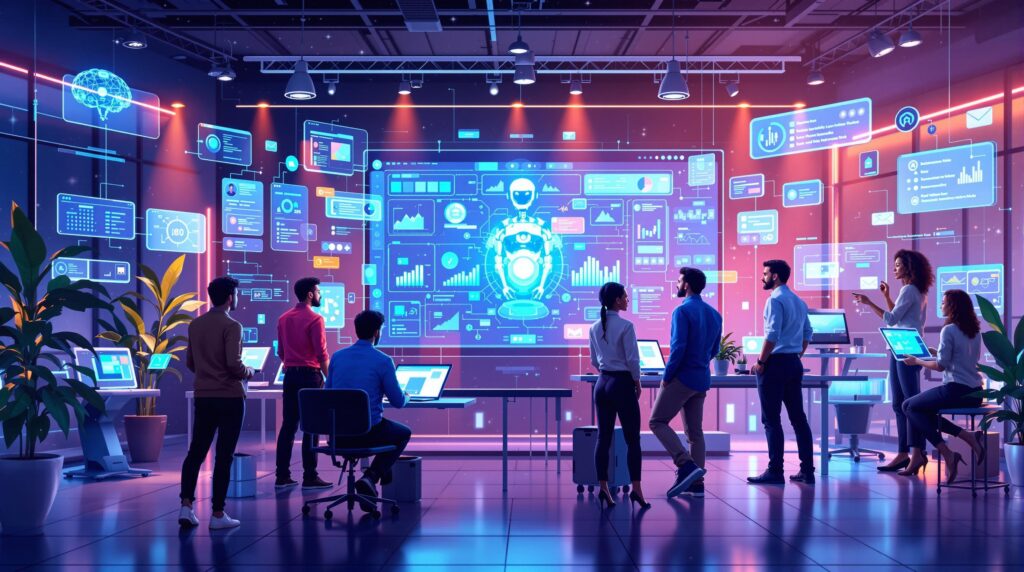
Introduction to Artificial Intelligence in Marketing
Artificial intelligence (AI) is revolutionizing the world of marketing, offering new opportunities to improve efficiency, personalize user experiences, and optimize business strategies. With AI, marketers can analyze vast amounts of data in real-time, predict consumer behaviors, and automate complex processes. This not only saves time and resources but also enables the creation of more targeted and engaging campaigns.
In this article, we will explore how artificial intelligence is transforming marketing, analyzing strategies, tools, and practical applications that are redefining the industry. We will discover how companies can leverage these technologies to gain a competitive advantage and improve their relationships with customers.
What is Artificial Intelligence in Marketing?
Artificial intelligence in marketing refers to the use of advanced technologies, such as machine learning, deep learning, and natural language processing (NLP), to analyze consumer data, predict behaviors, and optimize marketing campaigns. The primary goal is to enhance the effectiveness of marketing strategies, making them more personalized and data-driven.
Key Features of AI in Marketing:
- Data Analysis: AI can analyze large volumes of data quickly and efficiently, identifying patterns and trends that would be difficult to detect manually.
- Automation: Automates repetitive tasks such as email sending, social media management, and audience segmentation.
- Personalization: Enables the creation of tailored user experiences, increasing engagement and loyalty.
- Predictive Capabilities: Uses predictive models to anticipate consumer behaviors and optimize marketing strategies.
Examples of Use:
- Creating personalized content based on user preferences.
- Optimizing online advertising campaigns through machine learning algorithms.
- Implementing chatbots and virtual assistants to improve customer service.
AI-Powered Marketing Strategies
Artificial intelligence offers a wide range of strategies to enhance marketing campaigns. Below, we analyze some of the most effective ones.
1. Content Personalization
With AI, it is possible to create highly personalized content based on user preferences, behaviors, and demographic data. For example:
- E-commerce: Product recommendations based on purchase history.
- Email Marketing: Sending personalized emails with targeted offers.
- Social Media: Creating tailored ads for each audience segment.
2. Campaign Optimization
AI can analyze the performance of advertising campaigns in real-time, identifying which elements work best and suggesting changes to maximize ROI. For example:
- Google Ads: Uses AI to optimize ad targeting and placement.
- Facebook Ads: Analyzes user data to create more effective campaigns.
3. Chatbots and Virtual Assistants
AI-powered chatbots can answer customer questions, provide support, and even complete transactions. These tools improve the user experience and reduce customer service costs.
4. Predictive Analytics
AI uses predictive models to anticipate consumer behaviors, such as:
- Predicting which products will be in high demand in the future.
- Identifying customers at risk of churn.
- Suggesting strategies to increase customer retention.
5. Audience Segmentation
AI enables more precise audience segmentation, identifying groups of users with similar characteristics and creating targeted campaigns for each segment.
AI Tools for Marketing
There are numerous AI-based tools that can be used to improve marketing strategies. Here are some of the most popular ones:
1. Google Analytics
An essential tool for analyzing website traffic and user behavior. With AI, Google Analytics provides advanced insights and suggestions to optimize site performance.
2. IBM Watson
IBM Watson uses machine learning to provide predictive analytics and personalize user experiences. It is particularly useful for companies looking to improve customer experience.
3. Salesforce Einstein
Integrated with Salesforce’s CRM, Einstein uses AI to provide personalized recommendations, analyze customer data, and optimize marketing campaigns.
4. HubSpot
HubSpot uses artificial intelligence to automate marketing campaigns, improve lead management, and optimize email marketing strategies.
5. ChatGPT
ChatGPT, developed by OpenAI, is a versatile tool that can be used to create content, answer customer questions, and improve business communication.
The Impact of Artificial Intelligence on Marketing
Artificial intelligence is having a significant impact on traditional marketing strategies, transforming how companies interact with customers and manage campaigns.
1. Improved Efficiency
AI automates many marketing activities, reducing the time and costs required to execute effective campaigns. For example:
- Automating email sending.
- Managing social media.
- Real-time data analysis.
2. Personalization
With AI, companies can create highly personalized user experiences, increasing engagement and customer loyalty.
3. Predictive Analytics
AI provides predictive insights that help marketers make informed decisions and optimize marketing strategies.
4. Innovations in Marketing
AI is introducing new technologies and approaches, such as augmented reality (AR) and virtual reality (VR), which offer immersive and engaging experiences.
Practical Applications of Artificial Intelligence in Marketing
Here are some concrete examples of how artificial intelligence is transforming marketing:
1. E-commerce
- Personalized product recommendations.
- Real-time price optimization.
- Analyzing user behavior to improve the shopping experience.
2. Online Advertising
- Advanced targeting based on user data.
- Optimizing advertising campaigns to maximize ROI.
- Creating dynamic, personalized ads.
3. Customer Service
- Chatbots and virtual assistants providing 24/7 support.
- Analyzing customer interactions to improve service.
4. Content Marketing
- Automatically generating content based on user data.
- Optimizing content for search engines (SEO).
Conclusion: Artificial Intelligence in Marketing
In conclusion, artificial intelligence is transforming marketing, offering new opportunities to personalize user experiences, optimize advertising campaigns, and improve customer interaction. AI strategies and tools are redefining the industry, making marketing more efficient, personalized, and data-driven.
The future of marketing will see an increasing integration of AI, with new innovations and applications continuing to emerge. Companies that can effectively leverage these technologies will gain a significant competitive advantage, improving their ability to attract and retain customers.
Tags: Artificial Intelligence, Marketing, Marketing Strategies, AI Tools, Marketing Innovations, Technology, Machine Learning